
TRUSTyFOOD Final Conference: a European dialogue on the future of blockchain in the agri-food sector
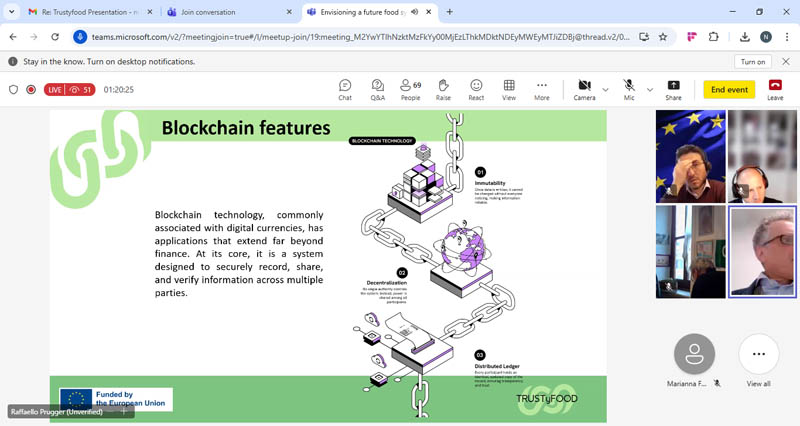
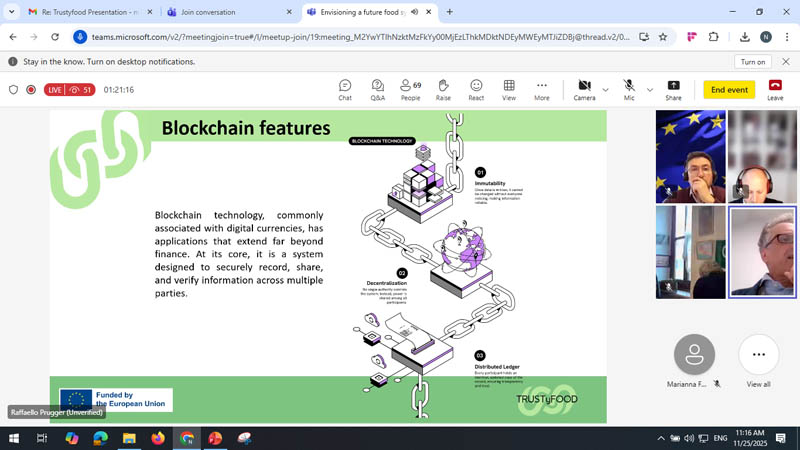
On 25 November 2025, the TRUSTyFOOD project held its online Final Conference, marking the culmination of more than three years of research, experimentation, and international collaboration on the role of blockchain in the agri-food sector. The event, opened at 10:00 by Project Coordinator Raffaello Prugger of Tecnoalimenti S.C.p.A., brought together around one hundred external participants, including researchers, policymakers, institutional representatives, and key stakeholders from across the food system.
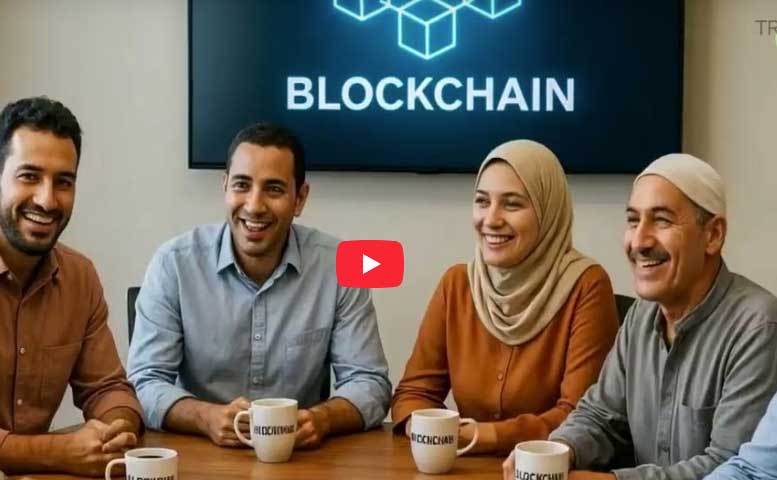
The morning session, moderated by the coordinator, highlighted the project’s main results and the evidence gathered across multiple application contexts throughout Europe. During the mid-day break, the project’s final video was shared with attendees, offering an additional opportunity to explore the work carried out and the impacts generated.
In the afternoon, moderation was led by Linda van de Burgwal from the Athena Institute – Vrije Universiteit Amsterdam. This second session featured a dedicated Q&A segment that stimulated direct interaction with participants and fostered reflection on challenges, opportunities, and future directions for blockchain technology in the agri-food sector.
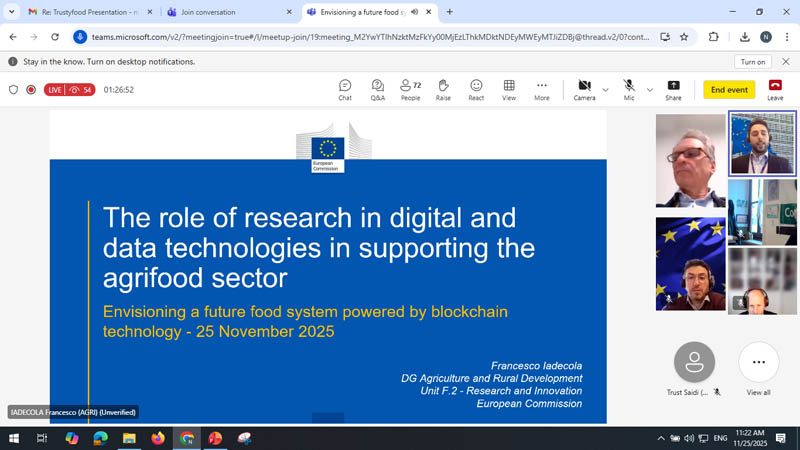
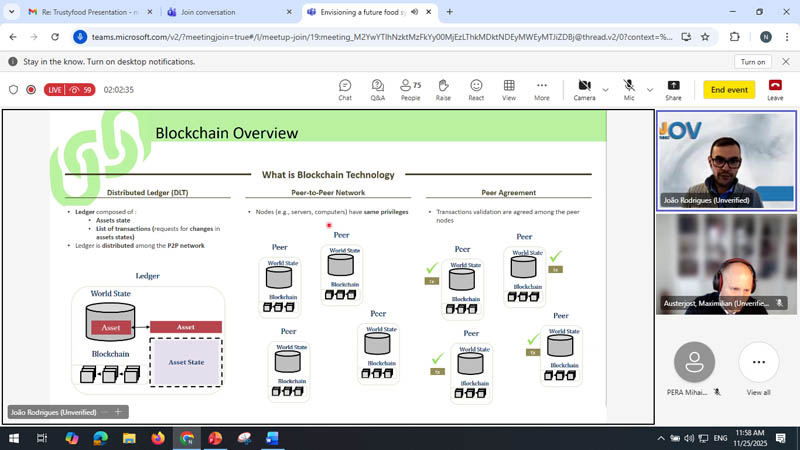
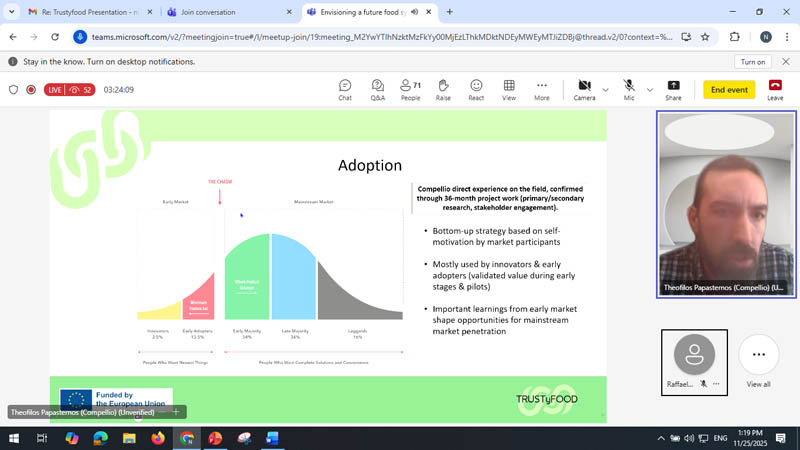
Speakers emphasised how blockchain can serve as a secure, transparent, and tamper-proof ledger for data management along the food supply chain, particularly in contexts where traceability, accountability, and data reliability are essential. At the same time, it became clear that widespread adoption remains limited by technical, regulatory, organisational, and economic barriers. Priority areas identified include renewed investment in research and innovation (R&I), the development of inclusive governance models, digital literacy and skills building, and the definition of interoperable standards.
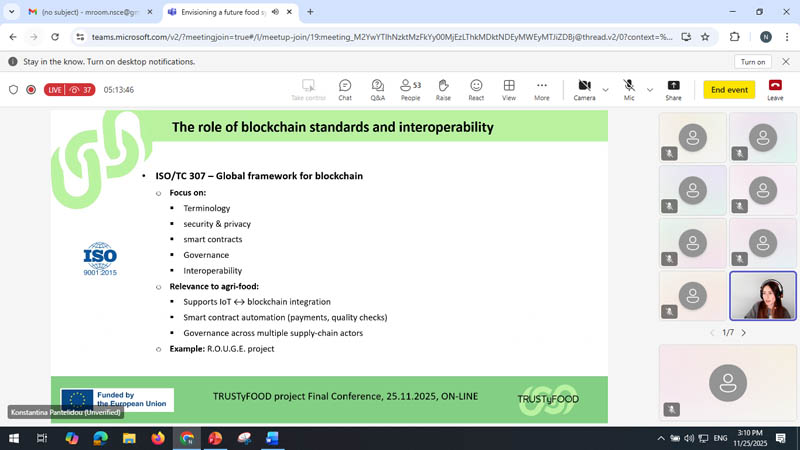
The conference showcased the project’s flagship output: the Research & Innovation Roadmap, a strategic document outlining the necessary steps to position blockchain as a truly enabling technology for a resilient European agri-food system. Alongside the Roadmap, the consortium also presented the White Paper on ‘Interoperability and Standards’ and made a referral to the other project’s outputs, considered the legacy for remaining projects (Policy Brief, Blockchain adoption advisory tool, and Framework of Services, a digital knowledge base platform which colelcts insights for end users interested in blockchain).
Daniel Rossi (CONFAGRICOLTURA – COPA-COGECA) highlighted how the work of the consortium opens a new and more concrete perspective, firmly aligned with the real needs of farmers and agri-food enterprises, moving beyond the overly generalized narratives that often accompany blockchain technologies. Contributions from international partners, such as NSCE and EthicHub, reinforced the global dimension of the debate, stressing the need for international cooperation, harmonised standards, and inclusive solutions capable of enabling market access and economic opportunities — especially for small-scale producers.
In closing, the coordinator reflected on how the project successfully addressed its initial guiding question: what conditions are needed to make blockchain a functional, effective, and truly sustainable tool for the agri-food sector? The discussions held throughout the event confirmed the need for an integrated approach that combines research, regulatory clarity, training, and active stakeholder participation.